Sod Installation in New Jersey New Lawns Done Right
When a lawn is too far gone to recover through seeding, bare from construction, stripped by grubs, dead from drought, or just too patchy to salvage, sod is the right solution. Installed correctly, sod roots into the soil within 2–3 weeks and gives you an established lawn immediately rather than waiting months for seed to fill in. Red Maple Landscapes handles sod installation for residential and commercial properties across Central NJ, from soil preparation through final establishment.
Get a Free Sod Installation Estimate →
Serving Somerset & Union County · 200+ Outdoor Projects · Licensed NJ Contractor · Free On-Site Estimates
SOD VS. SEED. WHICH IS RIGHT FOR YOUR NJ LAWN?
Both seeding and sod installation work, the right choice depends on your timeline, budget, the condition of your soil, the size of the area, and the time of year.
- Seeding is lower material cost, better for large areas, and works well when establishment can begin in late summer or early fall, the ideal window for cool season grass in NJ. It requires consistent watering during a 4–8 week establishment period and shouldn’t be heavily trafficked until fully established.
- Sod costs more in material but roots in 2–3 weeks, can be installed spring through fall, and can tolerate moderate foot traffic much sooner. It’s the right choice when you need quick results, when seeding has failed previously, or when the area is too steep or erosion-prone for seed to hold.
If you’re not sure which makes more sense for your situation, we’ll walk through the trade-offs during your free consultation. We don’t push sod when seeding is appropriate or vice versa.
Sod Installation in New Jersey: Our Process
Soil Assessment & Preparation
The most important part of any sod installation is what happens before the first pallet arrives. Sod laid over compacted, poor-draining, or nutrient-depleted soil will struggle to root and may fail at the edges or in low spots. We assess your soil, address compaction through tillage, amend if organic matter is severely deficient, and grade the surface so it drains correctly and provides a smooth final grade for the sod to sit on.
Grading
Surface grade before sod installation needs to be correct, both for drainage (sloping away from structures) and for the final appearance of the lawn. Low spots in the grade become low spots in the finished lawn that hold water and kill turf. We grade the area to within the tolerances required for a flat, even finished surface before any sod is laid.
Sod Selection
We source sod from reputable local suppliers, selecting varieties appropriate to Central NJ conditions. For most lawns, we use tall fescue sod, the most practical choice for NJ’s climate because it handles both summer heat and winter cold, tolerates partial shade, and establishes well in the clay influenced soils common in Somerset and Union Counties. For areas with more sunlight and higher maintenance tolerance, Kentucky bluegrass blends are an option.
Installation
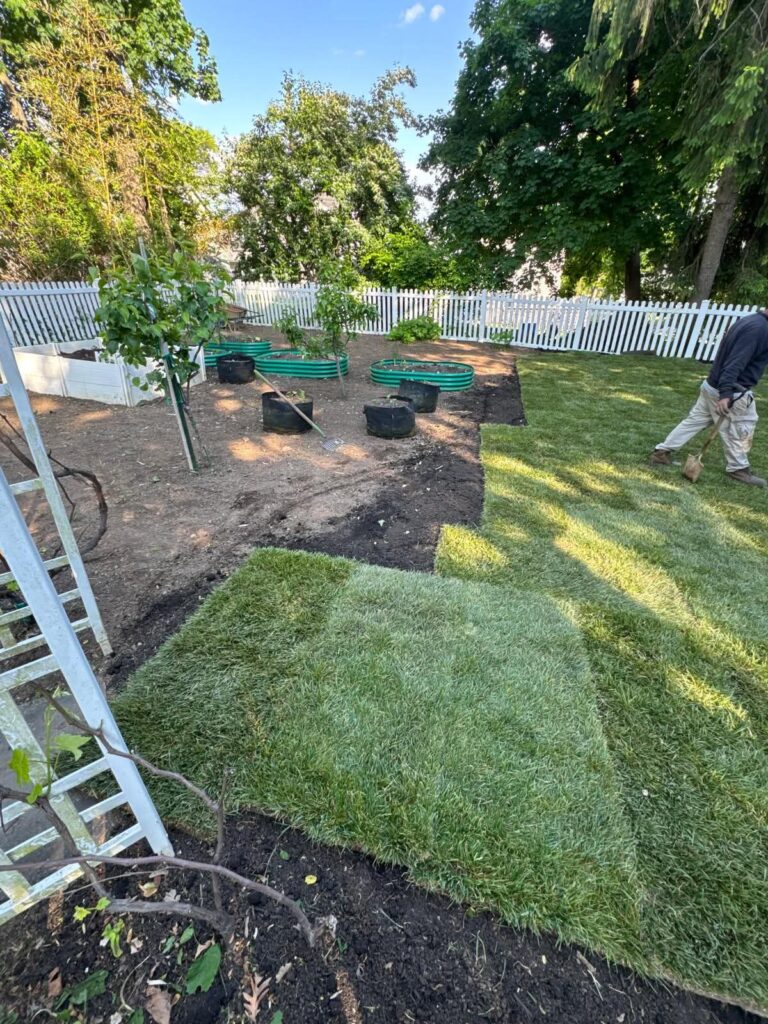
Sod rolls are laid in a staggered brick pattern, pressed firmly against the existing soil, and butted tightly at every joint. Joints that gap allow the edges to dry out and die before roots establish, we fit each row carefully and trim to follow curved edges and obstacle perimeters cleanly. On slopes, sod is staked to hold position during establishment.
Initial Watering & Establishment Guidance
Proper watering during the first two weeks after installation is critical to successful rooting. We walk you through the establishment watering schedule before we leave, frequency, duration, and how to tell whether the sod is rooting properly. Under watering during establishment is the leading cause of sod failure, and it’s entirely avoidable.
WHEN CAN SOD BE INSTALLED IN NEW JERSEY?
Sod can be installed almost year-round in NJ with the right conditions. The best windows are:
- Spring (April–June): Good establishment weather, but summer heat will put stress on recently installed sod if it hasn’t fully rooted before July. Requires diligent watering.
- Late summer/early fall (August–October): The ideal window for cool-season sod in NJ. Soil is warm enough for rooting, air temperatures are moderate, and fall rainfall reduces watering demand. This is when we recommend scheduling sod projects when timing is flexible.
- Summer (July–August): Possible with aggressive watering, but not ideal. Heat stress on new sod is real, and establishment failure risk is higher.
- Winter: Not recommended. Dormant sod won’t root until spring.
WHAT DOES SOD INSTALLATION COST IN NEW JERSEY?
Sod installation pricing in Central NJ depends on the area being sodded, soil preparation required, site access, grading needs, and material cost for the sod itself. General ranges:
- Sod material: Typically $0.50–$0.80 per square foot, depending on variety and quantity
- Soil preparation and installation labor: $0.80–$1.50 per square foot
- Total installed cost: Typically $1.30–$2.30+ per square foot, all-in
- Example — 2,000 sq ft lawn replacement: $2,600–$4,600+ depending on site conditions
These are general ranges. The written estimate we provide after visiting your property will be specific to your project. Sites requiring significant grading, topsoil, or difficult access will fall toward the higher end.
FREQUENTLY ASKED QUESTIONS. SOD INSTALLATION NJ.
How long does sod take to root in New Jersey?
Under good conditions, consistent watering, proper soil preparation, moderate temperatures, sod typically roots into the soil within 10–21 days. You can tell it’s rooting when you can no longer easily lift the edge of a sod piece. Full establishment with a deep root system takes about 4–6 weeks. Don’t heavily fertilize or allow heavy foot traffic until the lawn is fully established.
How much water does new sod need?
The first two weeks are critical. New sod should be kept consistently moist, typically watering twice daily in warm weather until the soil 3–4 inches below the sod surface feels slightly damp. After 2 weeks, reduce to once daily for another week, then transition to normal lawn watering (deep, infrequent irrigation). We provide a detailed watering schedule when we finish the installation.
Should I remove my old lawn before sodding?
Yes, in most cases. Laying sod over existing grass, even dead grass, creates a barrier that interferes with rooting. We remove existing vegetation through sod cutting, tillage, or herbicide treatment (depending on the situation), then prepare the soil before new sod goes in. Skipping this step is a common cause of sod failure.
Can I install sod in shaded areas?
Some areas. Tall fescue tolerates partial shade (3–4 hours of direct sun daily). Deeply shaded areas, less than 3 hours of direct sun, are difficult for any turf grass to establish and maintain. We’ll assess your specific shade conditions during the consultation and be honest about whether sod is a realistic option or whether alternative ground covers might serve you better in deep shade areas.
What’s the difference between sod and hydroseeding?
Hydroseeding sprays a slurry of seed, mulch, fertilizer, and water onto prepared soil. It’s faster and cheaper than hand seeding large areas and more erosion-resistant on slopes than dry seeding. Hydroseeding costs less than sod but takes 4–8 weeks to establish. Sod provides immediate cover and is ready for light use in 2–3 weeks. For most residential projects in our service area, we offer standard seeding and sod, we can discuss hydroseeding for appropriate applications.