
Landscape Drainage Solutions for Central New Jersey Homeowners
Water problems in a landscape don’t fix themselves. Red Maple Landscapes provides drainage services in New Jersey for homeowners dealing with standing water after rain, soggy patches that don’t dry out, erosion on slopes, or water moving toward their foundation. The longer a drainage issue goes unaddressed, the more damage it causes.
We assess what’s actually causing the water problem before recommending a solution. Sometimes it’s a grading issue that can be corrected by moving soil. Sometimes it needs a French drain, a dry creek bed, or a surface channel drain. The right answer depends on where the water is coming from and where it needs to go.
Licensed NJ Contractor · 200+ Projects · 4.8★ Google Rating
WHY WE DIAGNOSE BEFORE WE QUOTE
Drainage problems get mis-solved more often than almost any other landscaping issue, mostly because the visible symptom and the actual cause are often in different places. A wet spot in the middle of the lawn might be caused by a high water table, a clogged downspout 40 feet away, or a low point where multiple yards drain toward yours. Installing a French drain at the wet spot itself sometimes does nothing, because the water was never going to stop arriving, it just needed somewhere else to go before it got there.
Before we propose a solution, we walk the property during or right after a rain event when possible, trace the water’s path from where it lands to where it’s pooling or causing damage, and check grade, downspout discharge points, and soil composition. Central NJ’s clay-heavy soil, common throughout Somerset and Union County, drains slowly, which means surface water management often matters more here than it would in a sandier region.
Drainage Services in New Jersey
French Drain Installation
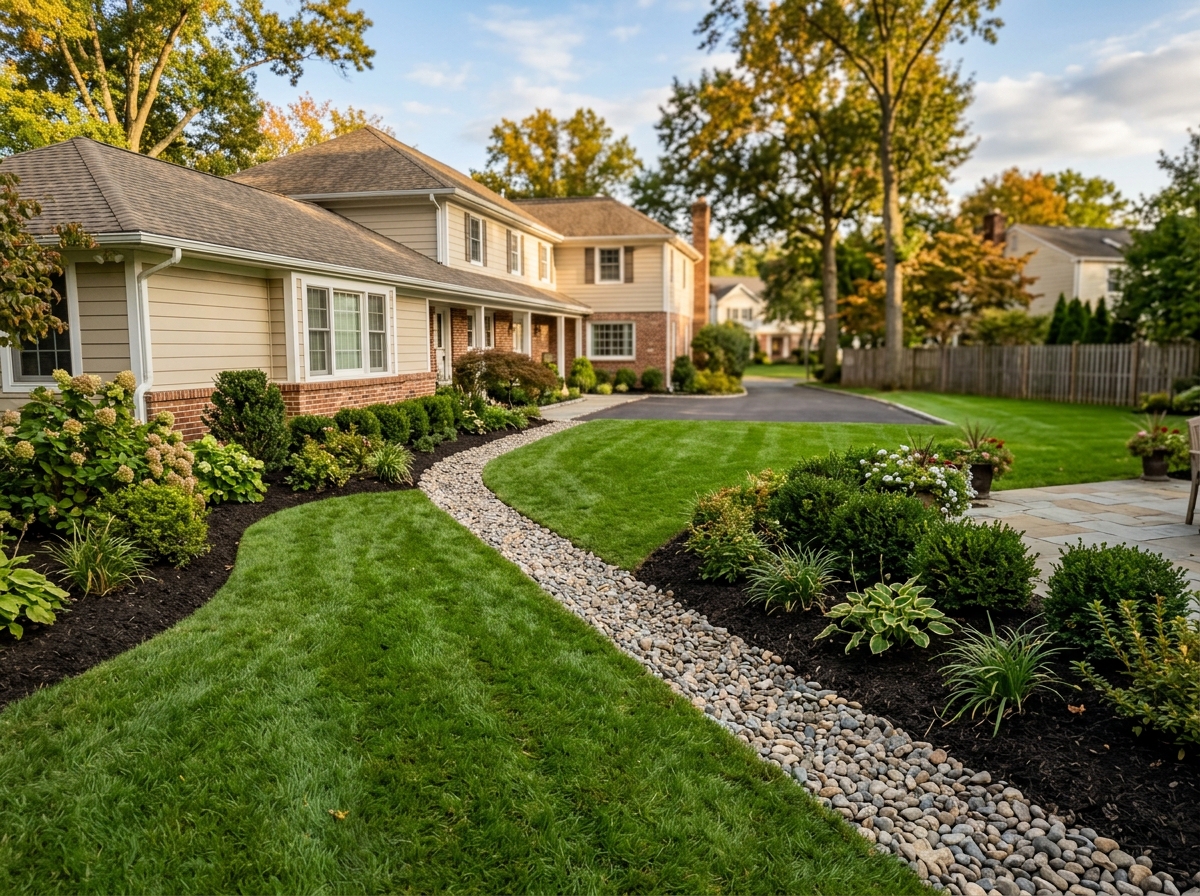
A French drain intercepts groundwater and surface water and redirects it away from problem areas. We design the drain depth, slope, and outlet location based on your site conditions not a generic formula.
Grading & Regrading
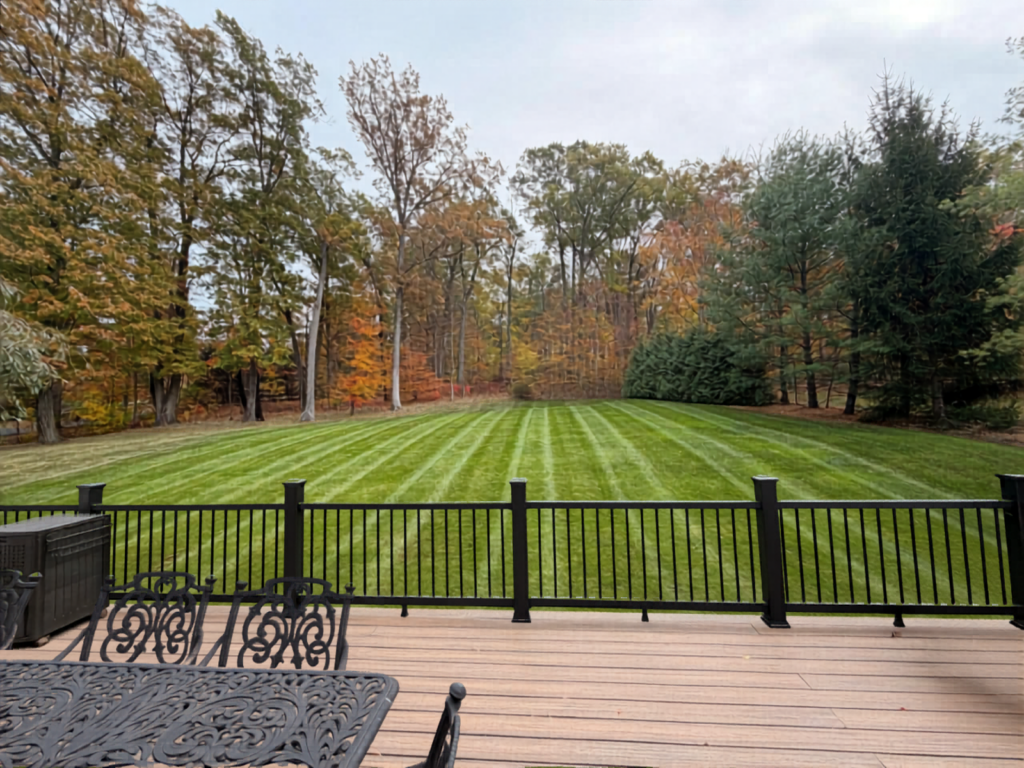
If water is moving toward your foundation or pooling in low spots, regrading, reshaping the ground surface often solves the problem without any piping at all. We assess the grade around your home and recommend corrections that redirect water where it belongs.
Dry Creek Beds
A dry creek bed handles surface water runoff while adding a natural-looking landscape feature. It works well on properties with a defined flow path during heavy rain, directing water through the landscape rather than across it.
Channel & Surface Drains
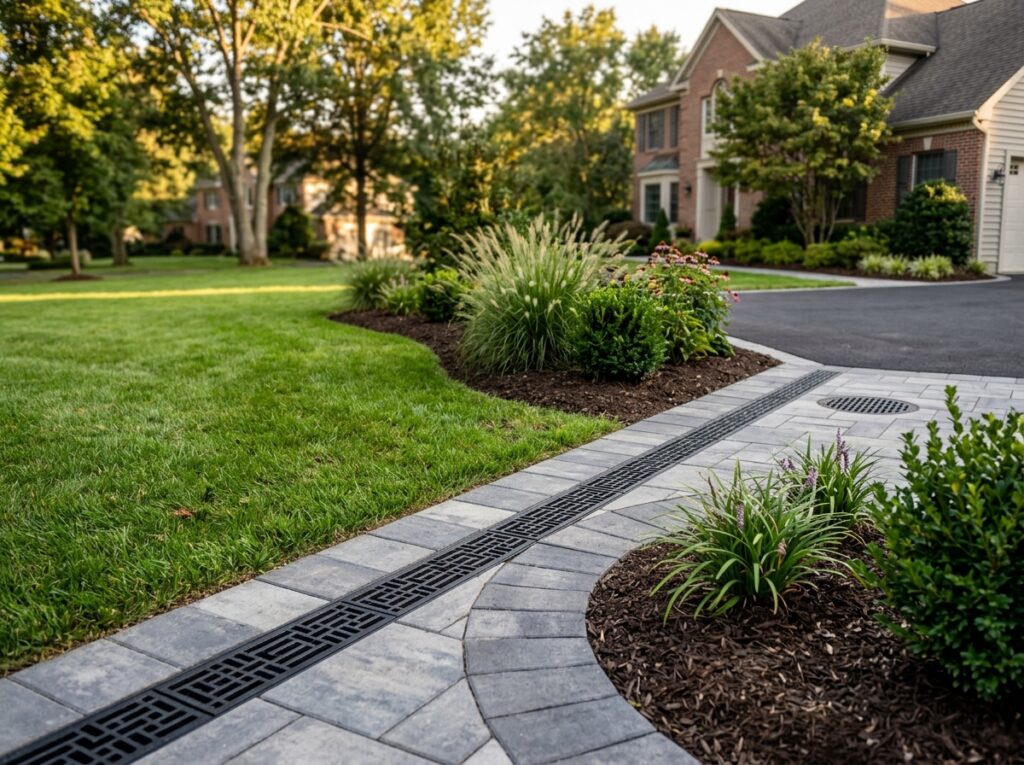
For driveways, patios, and low-lying areas that collect water during storms, we install channel and surface drains that capture water at the surface and route it to a safe outlet. These are often part of a new patio installation but can be added to existing hardscape as well.




Frequently Asked Questions, Drainage Solutions
Where does the water go after it leaves a French drain?
French drains need a discharge point, somewhere for the collected water to go. Options include daylighting to a lower point on the property, connecting to a dry well that allows water to slowly infiltrate the soil, or in some cases connecting to a municipal storm system where permitted. We identify and plan the discharge point as part of the design, a French drain without a proper outlet just becomes an underground reservoir.
Can drainage work prevent water in my basement?
Exterior drainage and grading work can significantly reduce the amount of water reaching your foundation, which often reduces or eliminates basement water issues that are caused by surface water infiltration. However, if the basement water issue is from a high groundwater table or a different source (plumbing leak, for instance), exterior drainage alone won’t solve it. We assess the likely cause and are direct about what exterior work can and can’t fix, we may recommend you also consult a basement waterproofing specialist for interior solutions.
How do I know if I need a French drain?
If you’re seeing standing water in your yard that doesn’t drain within 24–48 hours after rain, or if you have persistently wet soil in an area that doesn’t dry out through the week, a French drain is often the right solution. We offer a free site assessment to determine what’s causing the problem and what will actually fix it.
Can poor drainage damage my foundation?
Yes. Water that pools near a foundation can cause hydrostatic pressure against basement walls, contribute to settlement, and lead to basement water infiltration over time. If water is consistently moving toward your home rather than away from it, it’s worth addressing sooner rather than later.