
Fence Installation in New Jersey Wood, Vinyl & Aluminum Fencing
A well installed fence does more than define a property boundary. It creates privacy, establishes outdoor zones, contains pets and children, and frames a yard in a way that makes the space feel finished. Red Maple Landscapes provides fence installation in New Jersey — wood, vinyl, aluminum, and post-and-rail fencing for residential and commercial properties throughout Central NJ, with the same attention to post depth, material quality, and site conditions we bring to all our construction work.
Get a Free Fence Estimate →
Licensed NJ Contractor · Permit Handling Included · Residential & Commercial · 4.8★ Google Rating
Wood Privacy Fences
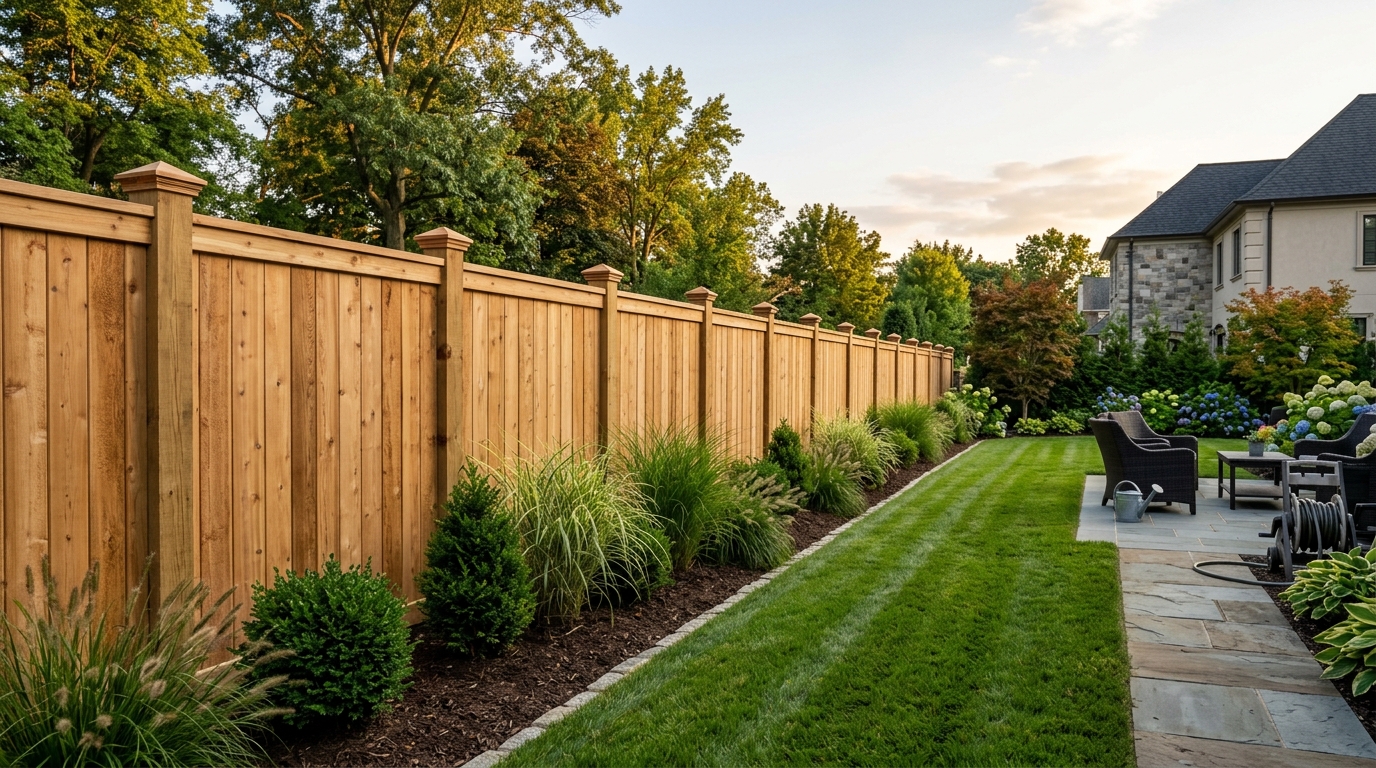
Wood privacy fencing — typically cedar or pressure-treated pine, is the most commonly requested fence type in Central NJ. We install board-on-board, shadow-box, and solid privacy configurations in standard heights of 4, 6, and 8 feet. Posts are set in concrete footings below the frost line, approximately 36–42 inches in Central NJ, to prevent frost heave and ensure the fence holds plumb through winter. Cedar is our preferred wood for privacy fencing: naturally rot-resistant, stable in NJ’s seasonal temperature swings, and takes stain or paint well.
Vinyl Fencing
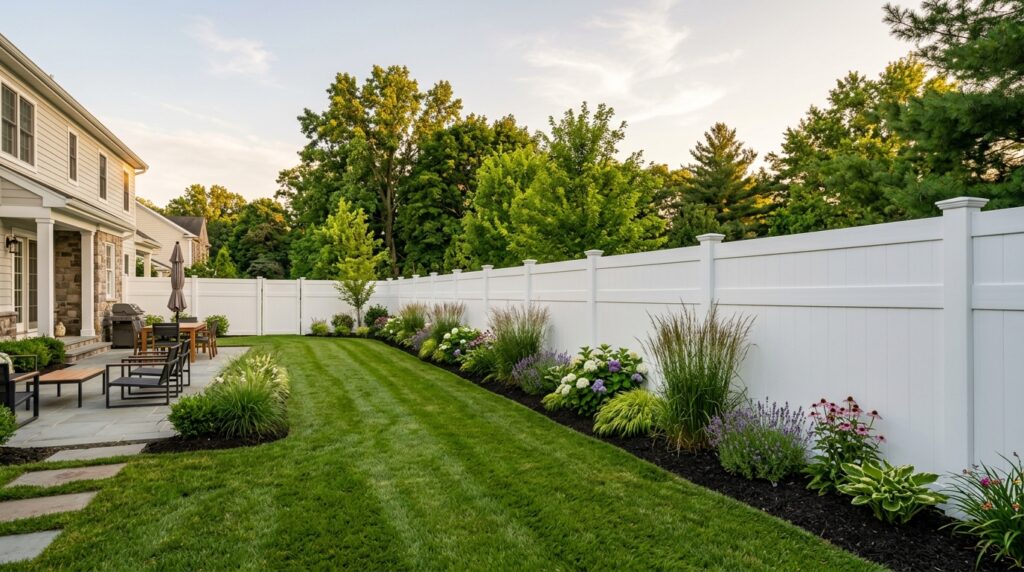
Vinyl fencing requires no painting, doesn’t rot, and holds its appearance with minimal maintenance beyond periodic washing. We install vinyl privacy, picket, and split-rail styles in white, tan, and gray. Vinyl expands and contracts with temperature in NJ’s climate range, proper post spacing and installation technique matters to prevent visible gaps in summer and bowing in winter. We follow manufacturer installation specifications for NJ’s climate zone.
Aluminum Ornamental Fencing
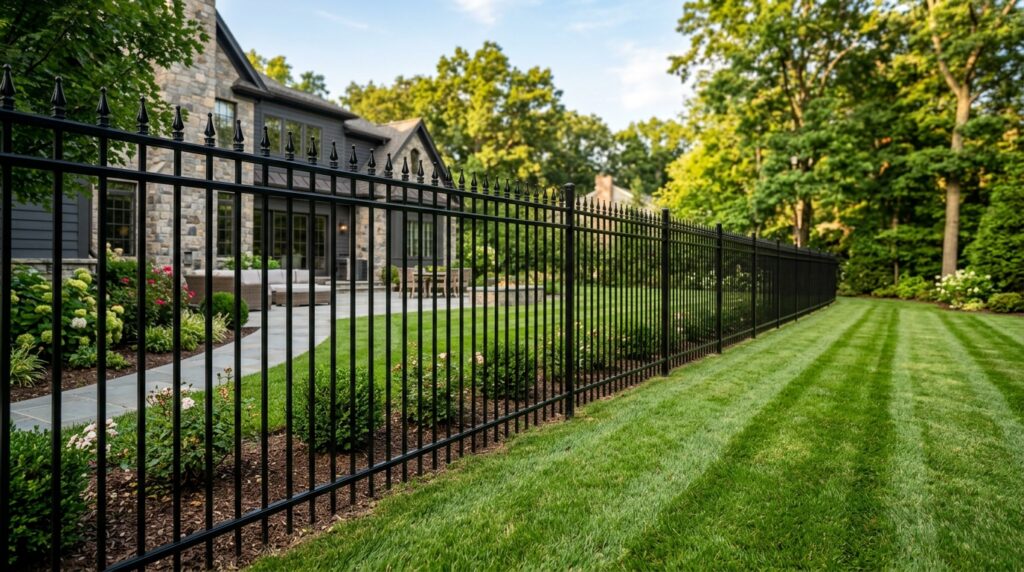
Aluminum ornamental fencing, the modern replacement for wrought iron, is low-maintenance, corrosion-resistant, and available in a wide range of styles and heights. It’s commonly used for front yard definition, pool enclosures (it meets most NJ pool fence requirements), and decorative perimeter fencing where privacy is less of the goal. We install powder-coated aluminum systems in black, bronze, and green.
Post and Rail Fencing
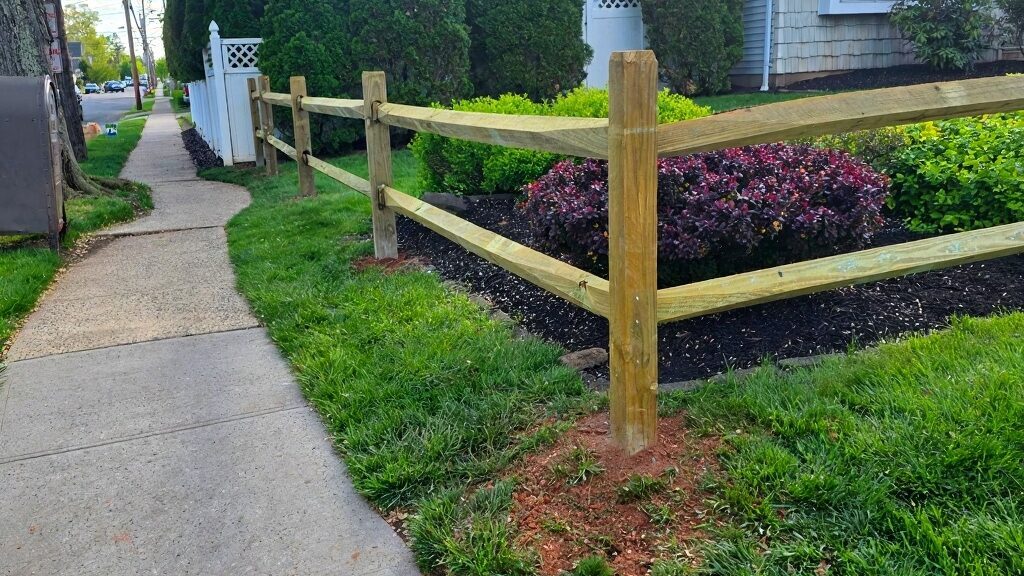
Post-and-rail fencing, one, two, or three rails between posts, works well for property line definition in open areas, farm and estate settings, and larger lots where a solid privacy fence would feel oppressive. We install split rail and round rail configurations in pressure treated wood and vinyl. Post and rail won’t contain a dog, but it’s a durable, clean looking boundary marker for larger properties.
WHY FENCE INSTALLATION QUALITY MATTERS IN NJ
The most common fence failure in New Jersey isn’t material failure, it’s post failure. Posts set too shallow heave out of the ground when frost pushes them up. Posts set without concrete in sandy or loose soil lean over time. Posts set without checking for plumb or using proper post levels result in a fence that looks straight when installed but reveals its lean over the first season.
We set posts at proper depth, always below the frost line, in concrete, using post-hole equipment that reaches the required depth without the post-pounding shortcuts some fence contractors use. It’s slower and costs more in labor, but it’s the difference between a fence that’s still straight in ten years and one that needs repair in three.
FENCE INSTALLATION PROCESS IN NEW JERSEY
1. Site Walk & Permit Research
We walk the fence line with you, mark the proposed layout, and research permit requirements for your municipality. Most NJ towns require permits for fences above a certain height (typically 6 feet), and some towns have setback requirements, minimum distance from the property line. We handle permit applications and include the costs in your written estimate.
2. Call Before You Dig
Before any post holes are dug, we call NJ 811 (or coordinate the call) to have underground utilities marked. This is not optional, it’s required by NJ law and protects you and our crew from damaging gas, electric, water, and sewer lines.
3. Layout & Post Installation
Posts are laid out on the specified fence line, holes dug to proper depth (below frost line), posts set in concrete, and checked for plumb before the concrete sets. We allow concrete to cure before attaching rails and boards, no same day rushing through the full installation when conditions require it.
4. Rail & Board Installation
Rails are attached to posts at the specified height, and boards or panels are installed to the specified configuration. We check alignment and level throughout installation rather than correcting at the end.
5. Gate Installation & Final Walkthrough
Gates are hung, hardware is adjusted, and we walk the finished fence with you to confirm everything meets the agreed specifications before we leave.
FENCE INSTALLATION COST IN NJ
Fence cost depends on linear footage, material, height, terrain, number of gates, and local permit fees. Rough ranges for Central NJ:
- Wood privacy fence (cedar, 6 ft): $25–$45 per linear foot installed
- Vinyl privacy fence: $35–$60 per linear foot installed
- Aluminum ornamental fence: $30–$55 per linear foot installed
- Post-and-rail (2-rail, pressure-treated): $15–$25 per linear foot installed
- Gates: $400–$1,500+ per gate depending on size and hardware
The only accurate number for your project comes after we walk the fence line. The consultation is free and we’ll give you a written estimate with full material and labor breakdown.
Do I need a permit to install a fence in New Jersey?
Most NJ municipalities require a permit for fences above 4 or 6 feet in height. Setback requirements, minimum distance from the property line, also vary by town. North Plainfield, Scotch Plains, Bridgewater, and other towns we serve each have their own fence ordinances. We research permit requirements for your specific municipality and include that process in our project scope.
How do I find my property line before installing a fence?
A survey is the only definitive way to locate property lines. Many homeowners use existing survey stakes, the plat recorded with the deed, or a pin-finder to locate property corners. If there’s any uncertainty about your property boundaries, we strongly recommend confirming them before fence installation, a fence installed even a few inches over the property line creates legal problems that are expensive to resolve.
Which is better, wood or vinyl fence for New Jersey climate?
Both work well in NJ with proper installation. Wood (particularly cedar) is preferred by many homeowners for its natural appearance and repairability, individual boards can be replaced if damaged. Vinyl requires essentially no maintenance and won’t rot, but it can’t be painted (limiting your color options to what it came in) and is more difficult to repair if physically damaged. We discuss the trade-offs with every client based on their priorities and property context.
How deep should fence posts be set in New Jersey?
In Central NJ, frost depth is approximately 36 inches. Fence posts should be set 36–42 inches deep to prevent frost heave, the freezing and thawing of the soil pushing posts out of the ground over winter. Posts set at 18–24 inches, which is common among low cost fence contractors, will heave and lean. This is the most important construction detail in fence installation in a freeze-thaw climate, and it’s one we never shortcut.
Can you install a fence alongside a new patio or retaining wall?
Yes, and coordinating fence and hardscape installation is something we plan from the beginning. Fence post placement has to account for patio edges, wall tops, and drainage structures. When both are happening at once, we sequence the work so hardscape and fence installations don’t interfere with each other and the finished result looks like it was designed together, because it was.