
Drainage & Property Care
Yard Drainage Problems NJ: Why Your Yard Stays Wet After It Rains
Red Maple Landscapes LLC · North Plainfield, NJ · Serving Somerset & Union County
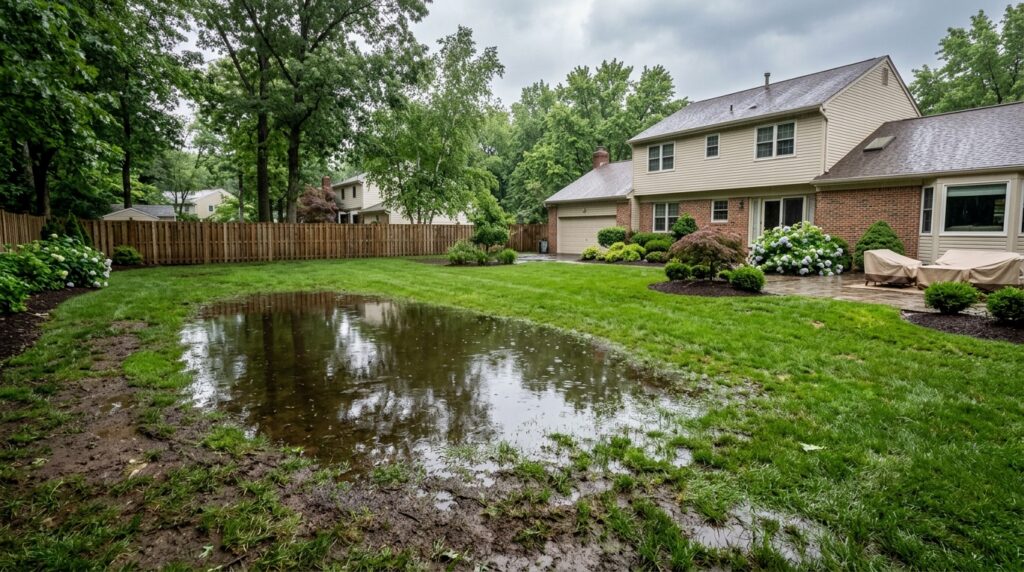
Yard drainage problems NJ homeowners deal with usually start the same way: a corner of the yard that stays wet for days after every storm. If that’s happening on your property, you’re not imagining it, and you’re not alone, it’s one of the most common calls we get from homeowners across Somerset and Union County, especially after a heavy summer downpour or a few days of steady fall rain. The good news is that standing water almost always has an identifiable cause. The less good news is that the cause isn’t always where the puddle is.
This guide walks through why yards in Central New Jersey hold water, how to tell a normal soggy patch from a real drainage problem, and what the typical fixes look like.
Why Central New Jersey Yards Are Prone to Drainage Problems
A lot of it comes down to soil. Much of Somerset and Union County sits on clay heavy soil, which drains far more slowly than the sandier soil you’d find closer to the Shore. Water that would soak in within an hour on a sandy lot can sit on the surface of a clay lot for a day or more. That means surface water management often matters more here than it would in other parts of the state.
Layer in the area’s mix of older housing stock with aging grading, newer developments with compacted subsoil from construction, and sloped or wooded lots in towns like Watchung, and it’s easy to see why drainage issues show up so often in this region — even on properties that otherwise look well maintained.
Worth noting in 2026: New Jersey has been under a statewide Drought Warning since late 2025, with much of the state experiencing moderate to severe drought conditions through the summer. That might seem to contradict a drainage problem, but the two aren’t mutually exclusive. Compacted, dry clay soil can actually shed water faster during an intense downpour because it hasn’t had time to absorb it, which means poor grading and clogged discharge points can still cause pooling even in a dry year.
Common Yard Drainage Problems NJ Properties Face
In our experience assessing properties throughout the area, a handful of causes show up again and again:
- Poor grading. If the ground slopes toward the house, a fence line, or a low corner of the yard instead of away from it, water has nowhere to go but down, and it stays there.
- Downspouts discharging in the wrong place. A downspout that empties six inches from the foundation, or into a spot that’s already low, can be the single biggest contributor to a wet yard.
- Compacted soil. Construction, heavy foot traffic, or years of mowing the same wet spot can compact soil to the point where water simply can’t penetrate it.
- Clay soil composition. Even well-graded clay soil drains slowly. Combined with any of the above, it compounds quickly.
- Blocked or undersized drainage. Older properties sometimes have drainage systems that were adequate decades ago but weren’t sized for today’s roof area, hardscaping, or storm patterns.
Reading the Symptom vs. Finding the Cause
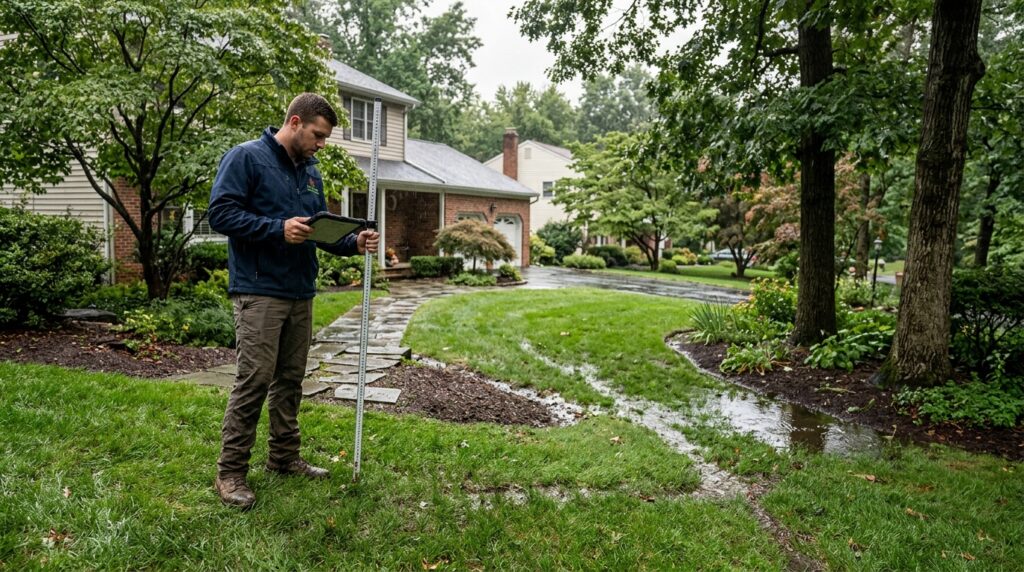
The visible symptom and the actual cause are often in different places. A soggy patch at the back of the yard might actually be caused by a downspout at the front of the house that’s overwhelming the grade and pushing water downhill. That’s why a proper assessment usually means walking the property during or shortly after a rain event, not just looking at the dry lawn on a sunny day.
A useful assessment typically checks:
- The overall grade and slope direction across the property
- Where each downspout discharges, and whether it’s carrying water far enough away from the foundation
- Soil composition and compaction in the affected area
- Whether neighboring properties or municipal drainage are contributing to the problem
How Yard Drainage Problems NJ Contractors See Most Often Get Fixed
Grading and Regrading
Reshaping the ground surface so water moves away from the house and toward an appropriate outlet is often the most foundational fix, and sometimes the only one needed. It’s also usually the first thing worth ruling in or out before adding any drainage hardware.
French Drain Installation
A French drain intercepts groundwater or subsurface water and redirects it to a safer discharge point. It’s a strong option when the water source is coming from below the surface or from a slope above the affected area, rather than purely from surface runoff.
Channel and Surface Drains
For water pooling on driveways, patios, or other hard surfaces, a channel drain captures runoff at the surface before it can spread into the lawn or toward the foundation.
Dry Creek Beds
In the right setting, a dry creek bed manages surface runoff while doubling as a landscape feature rather than a purely functional fix. It’s a popular option for properties where a visible drainage swale needs to look intentional, not like an afterthought.
Common Mistakes Homeowners Make
- Adding fill dirt without addressing the underlying grade. This can shift the problem to a different part of the yard instead of solving it.
- Installing a French drain before diagnosing the actual water source. If the real issue is a downspout or surface grading, a French drain may not help.
- Waiting until a wet spot becomes a standing pond. Persistent moisture at the surface can eventually affect the soil structure and nearby plantings, and it tends to get more expensive to correct the longer it’s ignored.
- Assuming it’s a one-size-fits-all fix. Every property’s grade, soil, and roof drainage is different, which is why a site visit matters more than a generic recommendation.
Frequently Asked Questions
How long is too long for water to stand in my yard after rain?
As a general guideline, water that hasn’t drained within 24 to 48 hours after a normal rain event usually points to a grading or soil problem rather than just heavy rainfall. Some slow drainage is normal in this region’s clay soil, but standing water that lingers for days, or keeps returning to the same low spot, is worth having assessed.
Will a French drain fix my drainage problem?
Sometimes, but not always. A French drain works well when the water source is coming from below the surface or from an upslope area. If the real cause is surface grading or a misdirected downspout, a French drain alone may not solve it, which is why diagnosing the actual source matters before choosing a fix.
Is fall a good time to fix yard drainage in NJ?
Yes. Fall is generally a practical window for drainage work in Central New Jersey because it gets the problem corrected before the ground freezes and before winter precipitation and spring snowmelt test the system. Waiting until spring often means dealing with damage that’s already happened.
Related Reading & Services
- Landscape Drainage Solutions — French drains, grading, dry creek beds, and channel drains
- Service Areas in Central New Jersey
- Patio Installation — drainage planning is part of every hardscape project
Not Sure What’s Causing Your Wet Yard?
We assess drainage during or after real rain events so we can trace the actual water path, not just guess from a dry lawn. If you’re in Somerset or Union County and dealing with standing water, soggy patches, or a yard that never seems to dry out, we can take a look.